Article7 min read
How Minecraft landed me an internship at Airbus
How ten years of building and running Minecraft servers, starting at age 10, gave me the technical skills and the engineering mindset that made the difference in my Airbus interview.

Translated from the original French version.
“Do you really have the skills?”
That was the first question I was asked in my interview at Airbus, at the end of 2025. I had just come off my first summer after prépa, I’d just finished my first year in engineering school (L3, three years into higher education), and I was applying for an end-of-studies internship, originally reserved for final-year master’s students, two years above my level. Bold, and I knew it: on paper I clearly didn’t have the level. But I was desperate, like pretty much every student without the luck of knowing someone on the inside.
Except when I read the list of required skills, something strange happened: I already knew them. Not from a class, not from a previous internship, but from a blocky video game I’ve been playing since I was 10: Minecraft.
Minecraft is not what you think
Minecraft is the best-selling video game in history, with more than 325 million copies sold and between 170 and 200 million monthly active players according to Microsoft’s official figures (Host Havoc, DemandSage). Any adult, gamer or not, recognizes the game, but what most people don’t know is what happens once you step outside of basic survival mode.
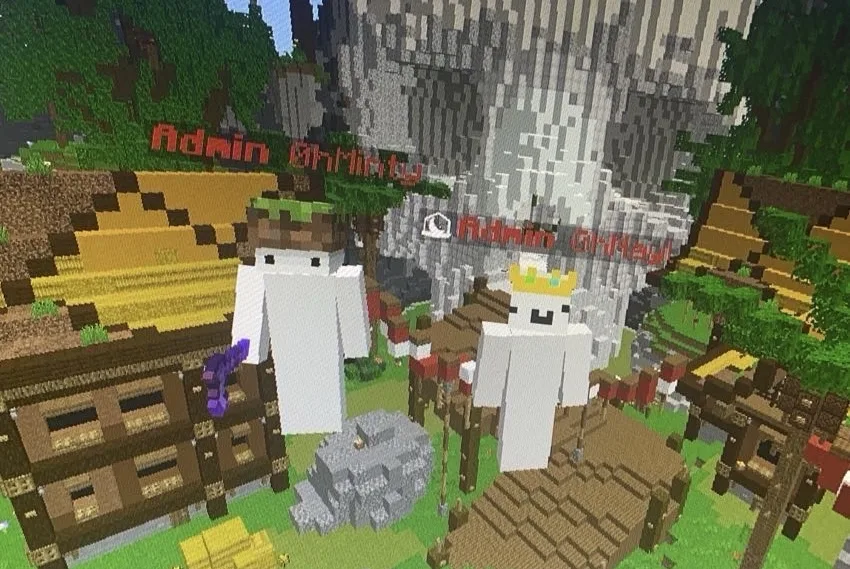
Minecraft is what’s called a “sandbox” game: an infinite world with no real limit on what you can build. And the real depth of the game isn’t fighting zombies solo, it’s on the online “servers”: custom worlds with their own rules, their own content, their own game mechanics, basically a game within the game. It’s a platform, with an admin team, developers, a moderation team, a business model, and users to retain.
Hypixel, the largest Minecraft server in the world, claims over 150,000 concurrent players at peak, and generates, according to several independent estimates, more than 15 million dollars in annual profit (ExpertBeacon, Minecraft IP List): it’s a real company, and without developers, there’s no new content, no players, and no revenue. Only the world is virtual, the stakes are exactly those of a real startup, or in cases like this one, of an established company.
Ten years old, one plugin, one passion
I started playing Minecraft at 10, and not long after, I was already posting my first Java plugin development tutorials on YouTube (pretty bold of me, I’ll admit). It wasn’t a career yet, but it was already a real technical practice, and a real passion, and that passion grew with me exactly the way my use of the game did: I went from building massive bases and fortresses to designing full game infrastructures serving thousands of players every month.
By 15, I was already coding freelance projects on my own, professionally, and doing well at it: I never let a client down, 5 stars on Fiverr on every job, and I was earning what other kids my age made babysitting, tutoring, or doing chores. Two months before starting prep school, I got my first real offer: a part-time contract with one of the biggest Minecraft servers at the time, a genuine shot at going pro in that world. Bad timing, unfortunately: I couldn’t commit that kind of time on top of prep school coursework.
A full-scale training ground
Building plugins and mods for Minecraft servers put me in front of subjects that had nothing childish about them, even if, seen from the outside, they didn’t look like much:
- Infrastructure: on-demand servers, with Redis and Docker
- System administration: managing, monitoring and maintaining machines in production
- Moderation: detecting suspicious behavior, automated sanction systems
- Business model: in-game sales, marketing, e-commerce with upsells
- Competitive positioning: standing out in a market already saturated with hundreds of servers fighting over the same players
Behind these somewhat abstract categories were real professional tools, the same ones you find in any company: a serious IDE (IntelliJ), an early introduction to Git and version control, the fundamentals of algorithms, and open source, which I discovered by reading and contributing to public plugin projects. There was also Docker and Redis for infrastructure, Pterodactyl to host and manage game servers, the basics of cybersecurity with SSH keys to lock down access, and networking with hosting providers like OVH or services like Cloudflare, so that all of this vocabulary was already familiar to me long before my first class in prépa, which, looking back, explains quite a lot.
My most concrete project in this space is called Elarys, one of the servers I spent the most time on, with over a thousand commits in a few months, and all of it before generative AI tools came along: no Copilot to guess the rest of a function, no model to debug for me, only real problems solved by hand, by someone learning by hitting the wall.
And you hit the wall a lot when you run a project alone, or close to it, between the hours spent pulling your hair out over a badly designed SQL query, a join blowing up in production, or a race condition you only discover at three in the morning when the server starts lagging. It isn’t comfortable, but that’s exactly where you learn the fastest, and above all where you pick up what no lecture really teaches: an engineer’s logic and way of reasoning.
To give a concrete example, picture a client who wants a procedurally generated world, with noise shaping the terrain: you then have to decide the proportion of objects to generate, how biomes are spread out, how deep caves randomly go, or how rare certain resources should be. Another client will want an automatic moderation system instead, one that can spot a cheating player and sanction them accordingly, and you have to choose which algorithm to build, but above all how to tune it so it does its job without punishing honest players. These are engineering problems, plain and simple, and the fact that they come up in a game doesn’t make them any less real.
In the end, Elarys never opened under my direction, because starting prépa put everything on hold, but my friend and former co-founder Ilyes picked the project back up a few months after I left and launched it on his own. The server runs today with tens of thousands of euros in yearly revenue and hundreds of players online every day, so thank you, Ilyes, for keeping alive what we built together: it’s the proof that it was never a toy, but a real foundation.
The call back, two days later
All these skills, picked up on the ground as a freelancer, manager, system administrator, moderator, web developer or community manager, stayed with me long after I closed Minecraft. They came back in prépa, in Paris, when I discovered Python in class and everything felt strangely familiar, then in the technical interviews I prepared on LeetCode, and above all the day I read the Airbus job posting and recognized, in the list of required skills, tools I had only ever come across in one place: on Minecraft.
So I took my chance without really believing in it, and a few weeks after I applied, I was invited to an interview that opened with that blunt question about whether I belonged there. I answered with what I really had, meaning my motivation, technical skills earned on the ground and an independence I had built the hard way, and two days later they called me back to tell me I was in.
The internship lasted four months, during which I worked on monitoring and test automation for critical internal applications, with tools like Prometheus, Grafana, Docker and Python, taking things from a first prototype all the way to daily use by the team.
Looking back, it’s no coincidence that all of this looks like a professional version of what I was already doing on my Minecraft servers: infrastructure, automation, monitoring and reliability, with tools that had changed scale, but a logic that hadn’t moved.
What really made the difference
It was only at the very end of my internship that I found out what had actually tipped the scale that day. It wasn’t my academic level, clearly below what was expected, nor even the skills I had learned in class, but my motivation: the drive to work on concrete projects, and to dust off skills built on a blocky video game to prove, to myself as much as to any recruiter, that they had real value. I had always believed it, but it was the first time I had proof.
To this day, this experience remains the most rewarding of my journey, personally as much as professionally, because it let me see from the inside how a large industrial company works, and what the engineering job really looks like, far from theoretical lectures and tidy textbook exercises.
And it’s only one step, since I’m aiming even higher for the year ahead, with a new level at a big tech company and the same motivation that brought me this far: if a video game could open Airbus’s doors for me, I really see no reason to stop there.